
Journal
Didgeridoo, shehnai, berimbau: the instruments behind Jyoti Supernaturel
About the artist: Jyoti Supernaturel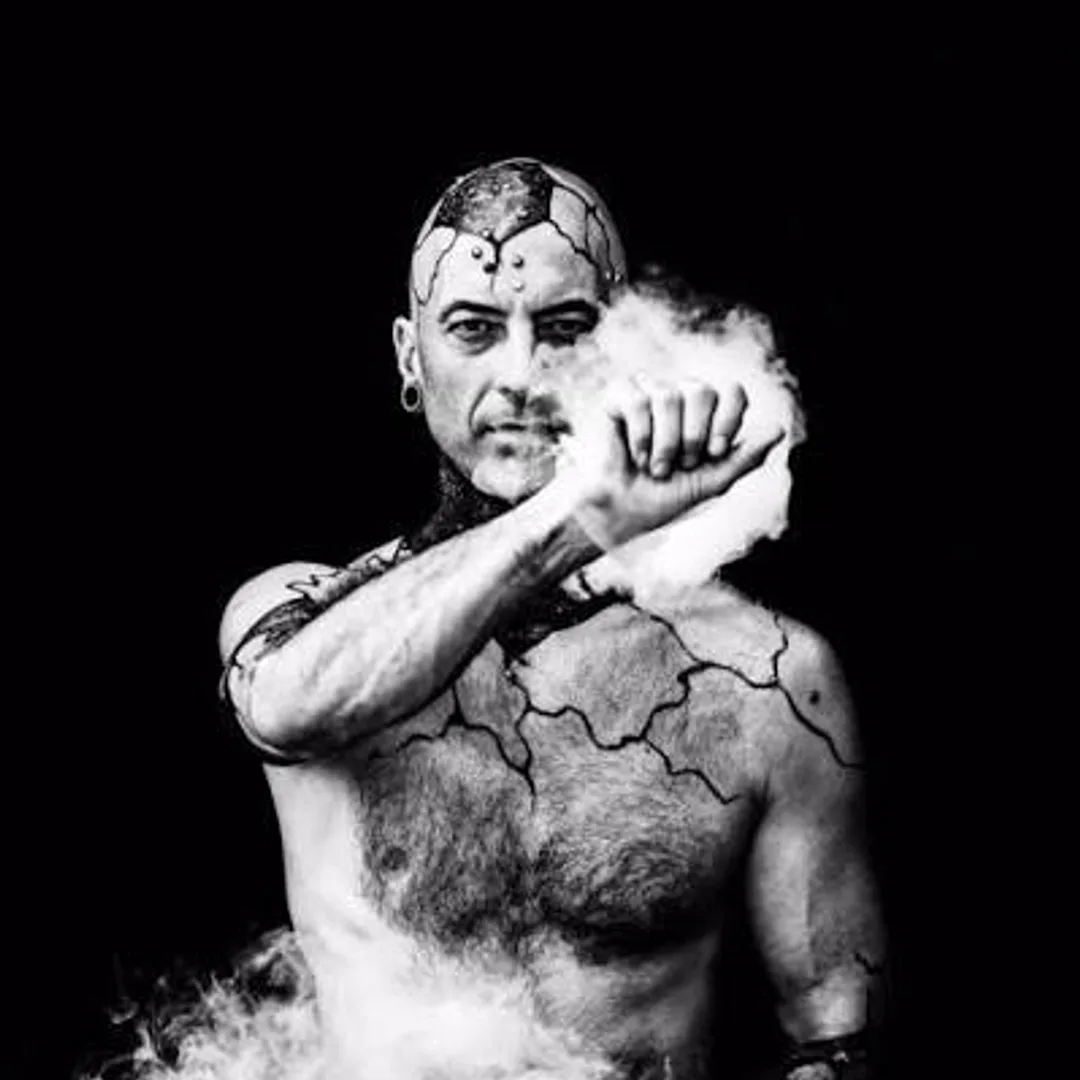
In the bio of his Instagram profile Jyoti Supernaturel lists his instruments: didgeridoo, shehnai, a traditional African drum, an Indian sitar, berimbau and an analogue synthesizer. They come from several parts of the world, and the synthesizer is the only electronic item on the list. In an interview with the website Artifex he says he collects instruments on his travels. At a May 2015 concert on Ko Pha Ngan, described by the Artifex editor, the sound included flutes, didgeridoo, African percussion and sitar.
Aboriginal peoples of northern Australia developed the didgeridoo. Makers usually choose a eucalyptus trunk that termites have hollowed out, and they trim it to about 1.2 metres. The player buzzes the lips and holds one steady low tone by circular breathing, drawing breath through the nose while the cheeks keep the sound going. The result is a long note that other instruments can sit on.
The shehnai comes from South Asia. It is a double-reed wind instrument with a wooden body, a flared metal bell and six to nine finger holes. The range spans two octaves. Players take it to weddings and religious festivals. In coastal Goa, temple musicians called Vajantri served the shrines and received land in return. Jyoti says he performs often in India and rehearses there at small improvised gigs with friends.
The berimbau connects the music to physical practice. It is a single-string musical bow of Angolan origin, built from a wooden arc, a steel wire and a gourd resonator. In capoeira the berimbau sets the rhythm of the roda, the circle of players, and steers the game. Jyoti began capoeira in South America, still practises it and lists himself among capoeiristas. He knows the instrument from both sides, as a musician and as a member of the circle.
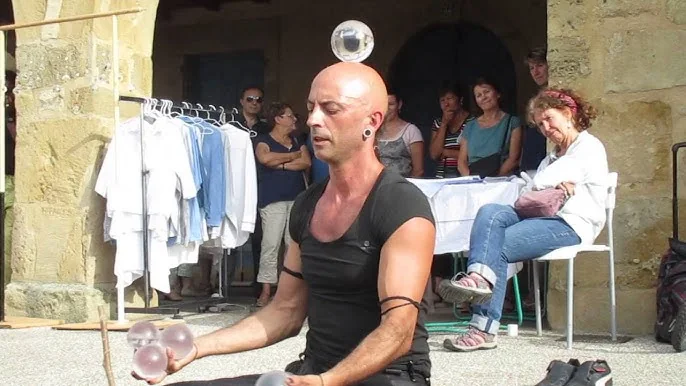
The crystal balls have a history of their own. The American performer Michael Moschen shaped the modern form of contact juggling in the 1980s in his act Light, holding up to eight clear 75-millimetre balls in one palm. In the 1986 film Labyrinth, Moschen stood behind David Bowie and reached around him for the shot, and the credits name him for crystal ball manipulation. He received a MacArthur Fellowship in 1990, and a 1991 PBS special brought the genre to a wide audience. John Miller is credited with coining the term contact juggling, in a 1990 book that first appeared in a run of 100 photocopies. Moschen himself called the label contradictory and created for commercial reasons.
The Jyoti Supernaturel act continues that tradition and adds live sound to the balls: flute, shehnai and didgeridoo sit beside them. In the interview he says he cannot picture the act without music.